
Simple Isn't Easy
A Closer Look at our Modern Garden Bench Project

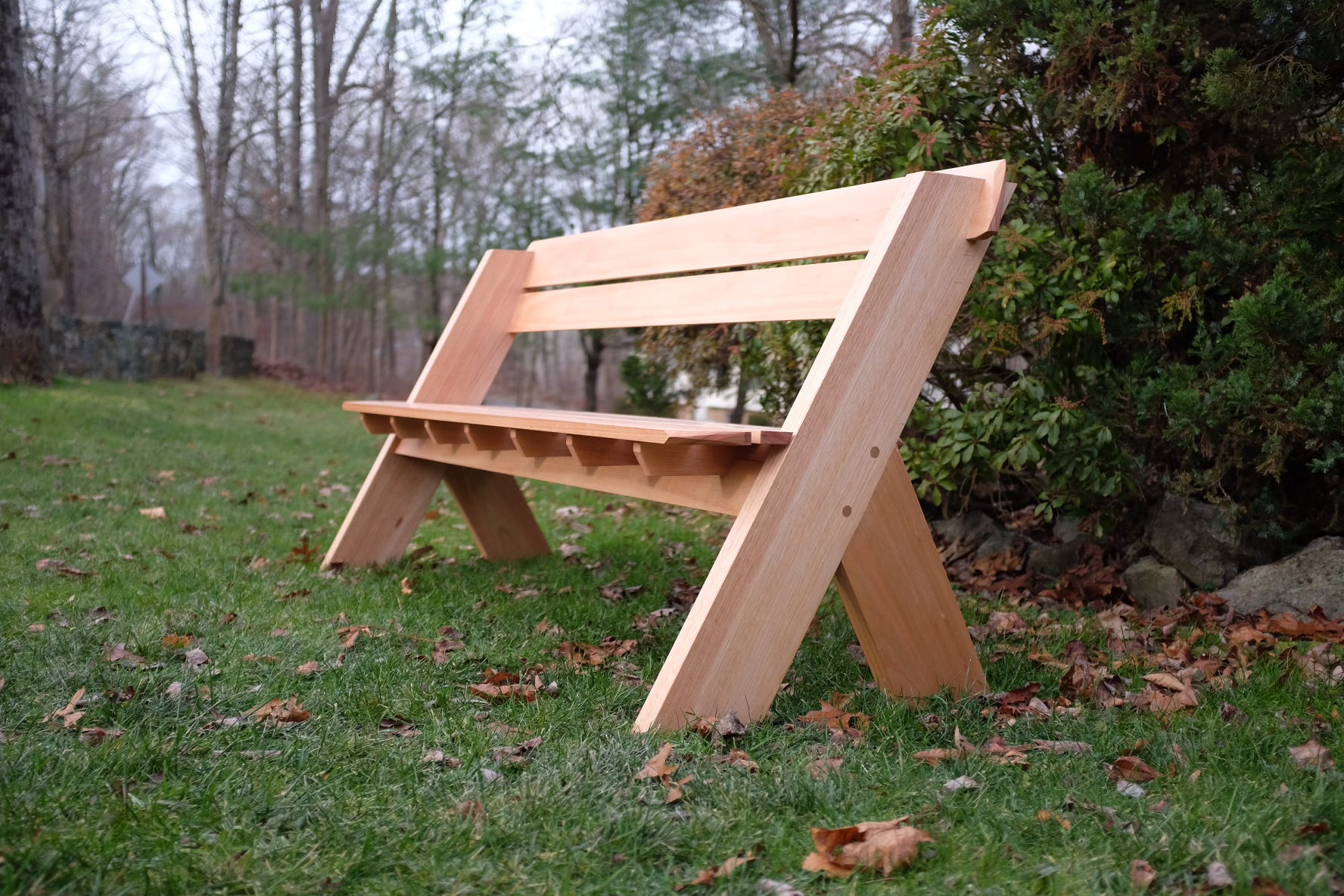
One of the things I’d eventually like to do with Bevel-Up Woodworks is offer or support opportunities for young children to experience woodworking. Building a thing is a chance to bring something out of the mind and into the real world. In this way, woodworking can offer a sense of independence and accomplishment that is materially distinct from other activities we steer kids to. When we let kids create, we’re letting them find their own sense of success and direction.
It was an honor, therefore, to be asked to build this garden bench for the a local Montessori program. Montessori ideas about education dovetail closely1 with another system called Sloyd education. Both philosophies feature curricula that are tactile and encompass building character as well as intellectual capabilities.
This bench was commissioned to provide a place for families to sit while picking up children from school and to commemorate the beginnings of the program.
The Leopold Bench
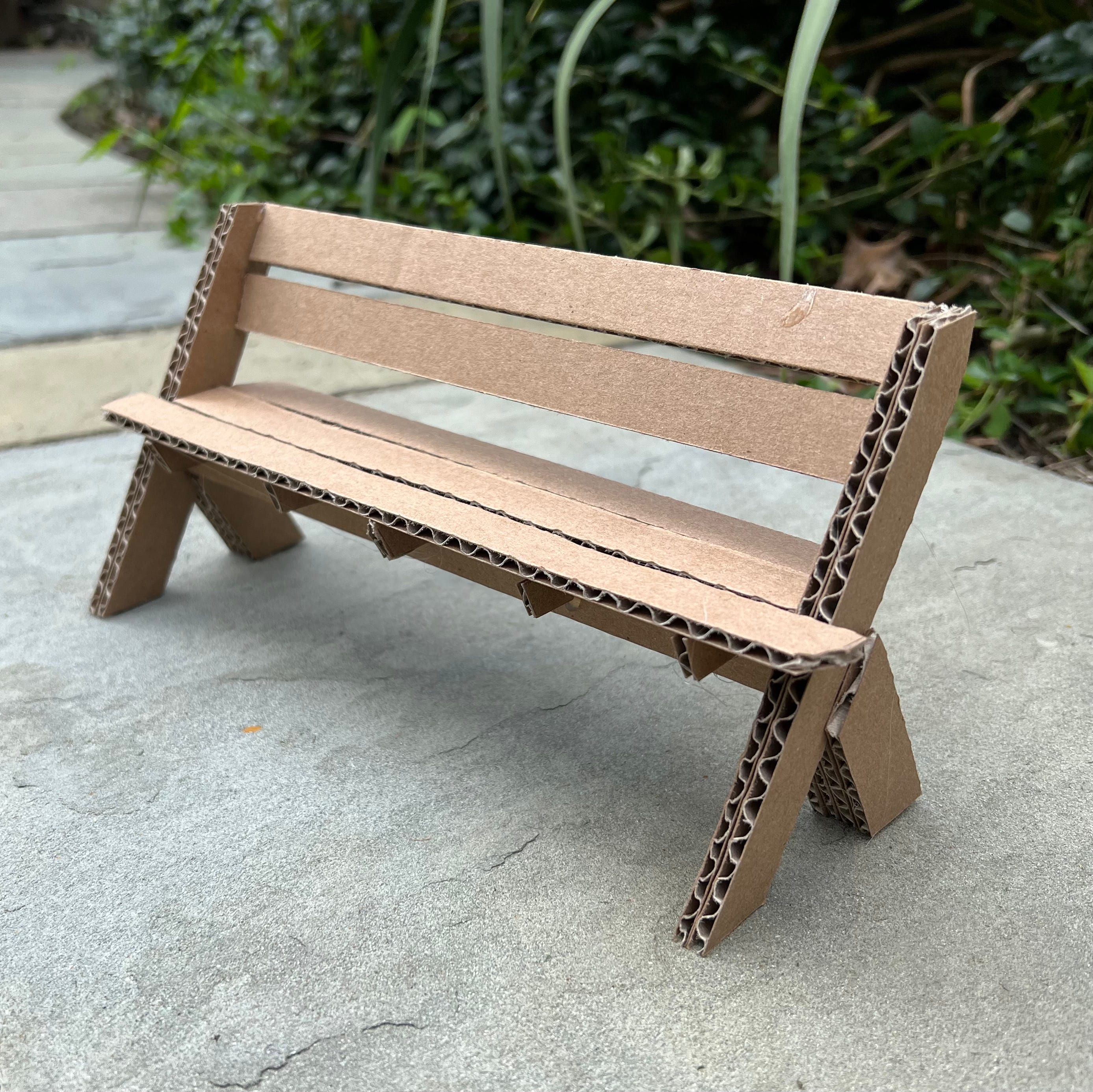
Ding! I received the photo below of a bench spotted in a forest in Maine. It had caught the eye of the program founder/director. After some research, I discovered that this bench was designed by the naturalist Aldo Leopold and has since become something of a popular DIY project.
Leopold built benches and seating similar to this from found wood. The bench can be used as one would normally sit on a bench or you could turn around, legs through the back opening and prop your elbow on the backrest to hold up binoculars for birding.
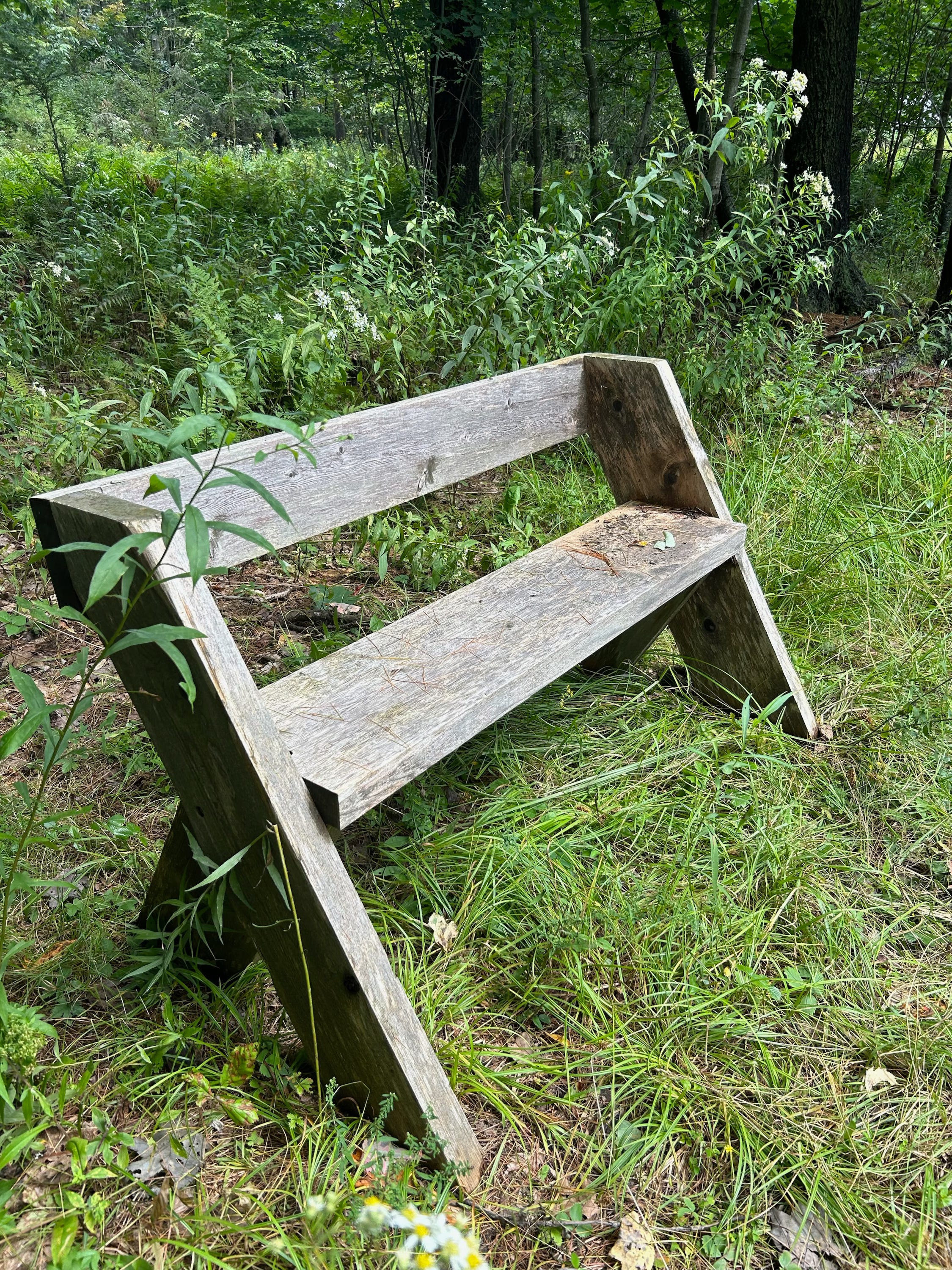
The original design is six boards nailed or screwed together. This simplicity of construction results in a simplicity of form. There is no ornamentation, just pure form. I’ve heard a lot of people say they like the “simplicity” of the design. What they mean, on further probing, is that they like the clean lines, lack of ornamentation and forthrightness. There’s no beading or inlay. The design is composed of uninterrupted lines that go, more or less, from point A to point B without meandering.
For my bench design, I wanted to preserve that purity of form but infuse some furnituremaking sensibility and my own aesthetic. I decided that my design should preserve the strong visual statement of the legs from the original design but use a floating seat to create an area of visual interest through light and shadow.
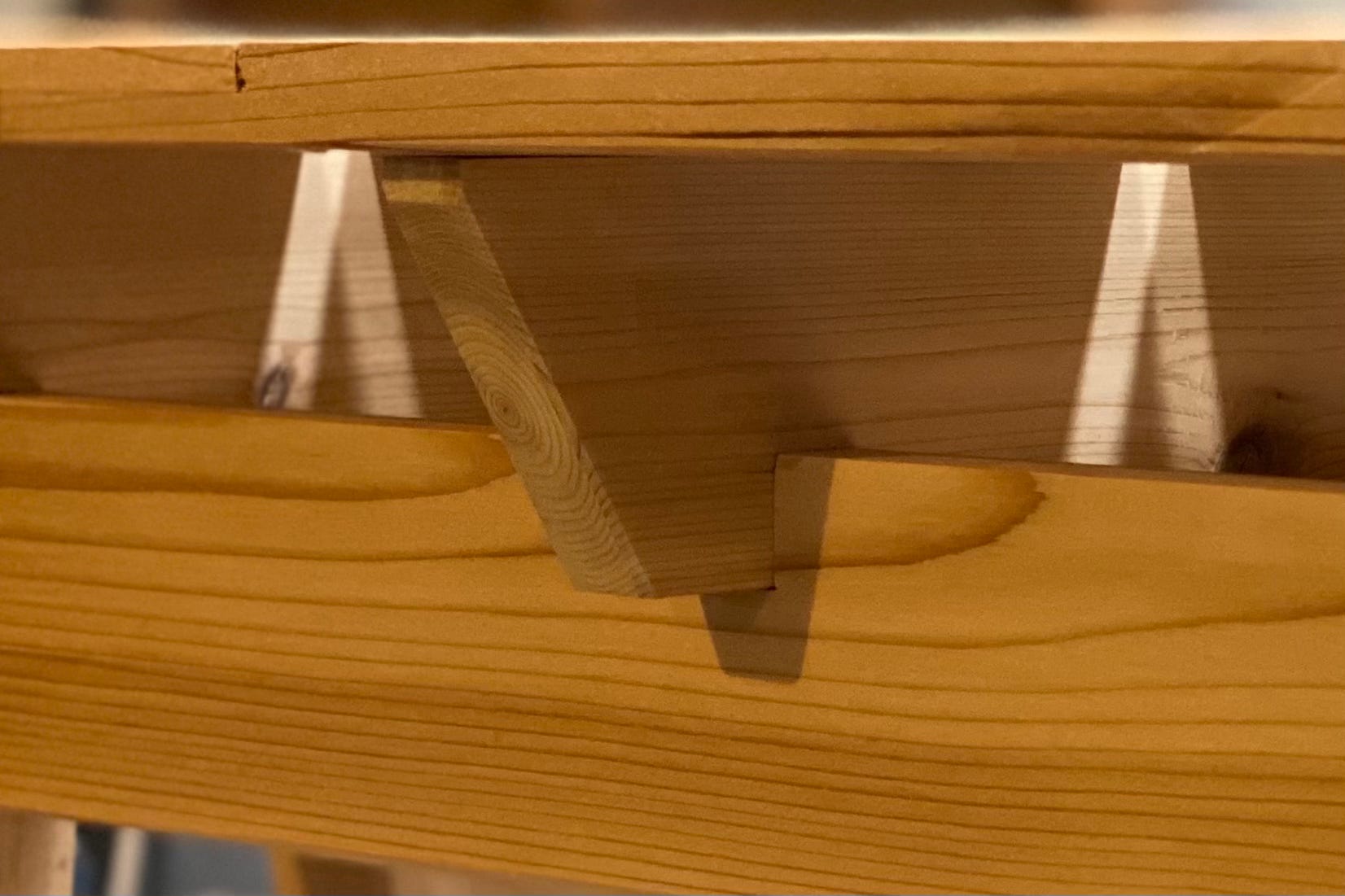
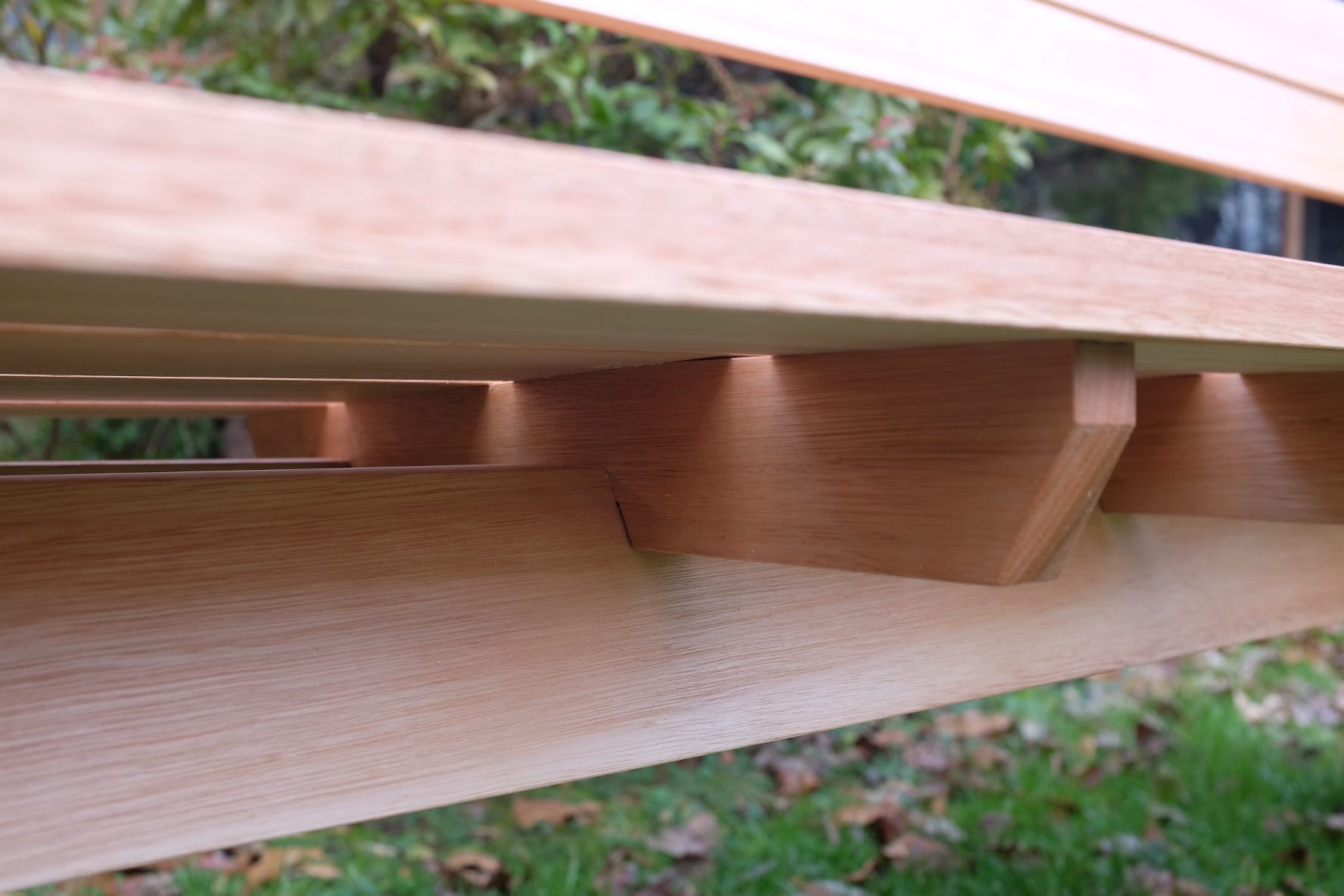
The funny thing about designs that lean heavily on form over ornamentation is that there isn’t anywhere to hide. The simpler the form, the more design and execution details matter. A forest is more than just a collection of individual trees.
Ergonomic Details
Furniture design has to be ergonomic in addition to aesthetic. Unlike art pieces, furniture is intended to be functional and to be functional, it needs to support human needs.
Most designs for the Leopold bench simply have the back at the same angle as the legs (too laid back) or have the back at a 90 degree angle (too upright). These angles, combined with the flat seat might be OK for a short while, but will quickly tire one out.
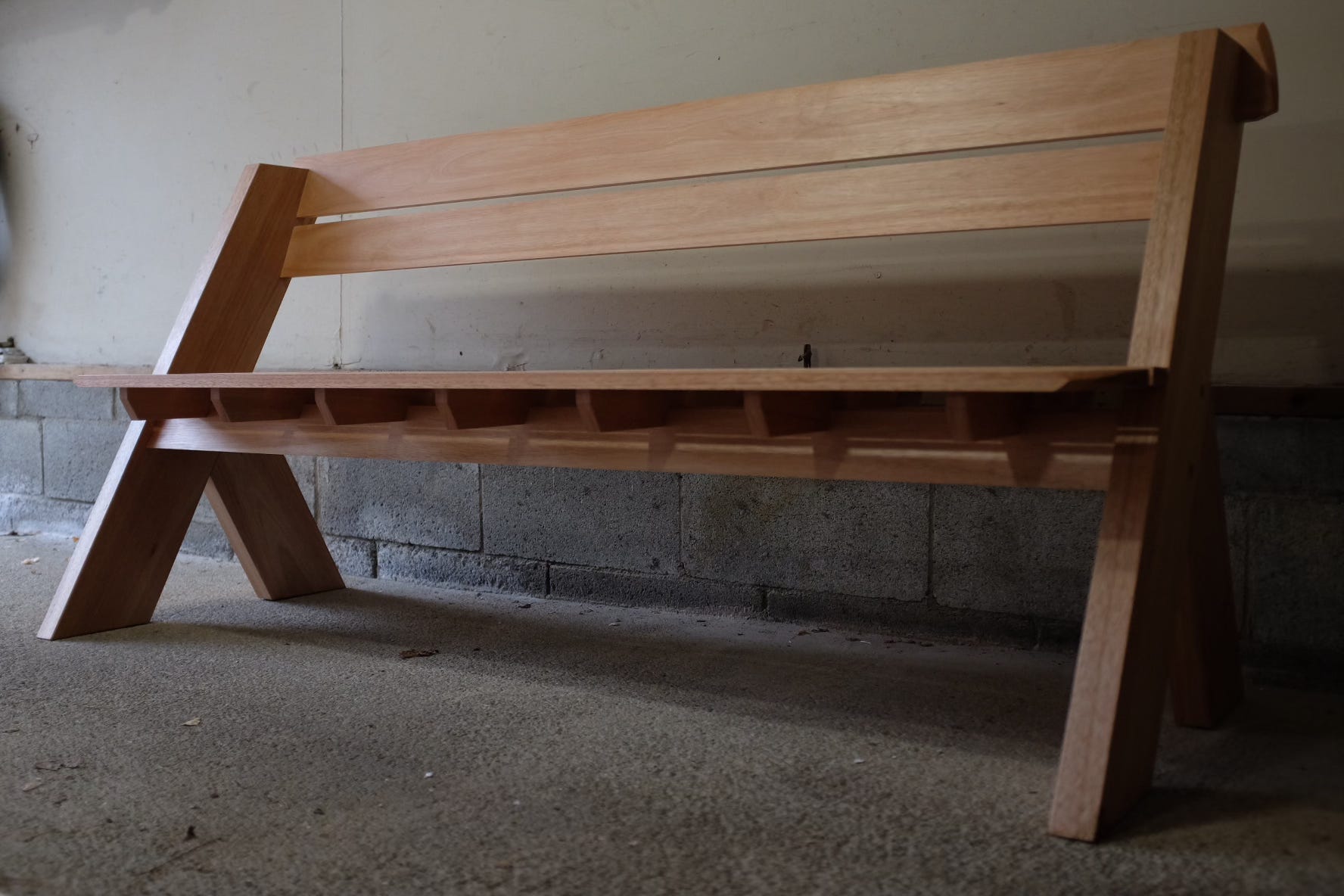
I solved this problem within the confines of the original form by positioning the back and seat independently of the leg angle. The back slats are a bit more vertical than the leg angles and the seat slopes back and down. Together these angles allow the hips to open up like in a casual chair while still providing support.
Changing this angle meant laying out and cutting the joinery for the back slats was more work, but it was worth it accomplish the ergonomic goals.
Construction Details
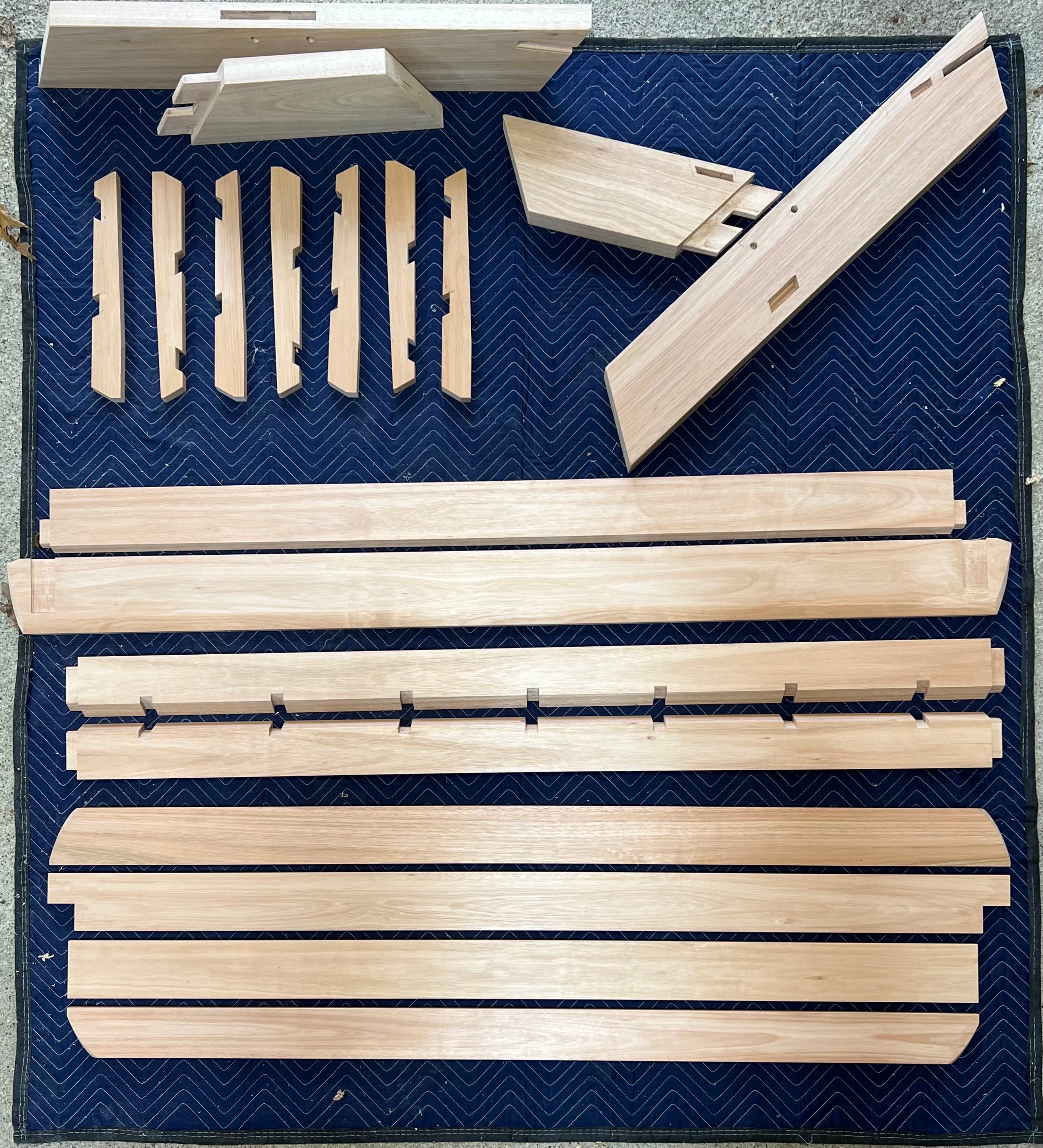
The construction of the bench revolves around mortise and tenon joinery. If you don’t know what a mortise and tenon is, think “tab A (tenon) into slot B (mortise)”. If woodworking joinery is a band, then the mortise and tenon joint would be the bass player or drummer laying down a reliable beat. Executed well, it’s a strong joint but not one that calls attention to itself.
Each leg is made of two pieces with pinned twin tenons holding the assembly together. The stretchers which support the seat ribs are also tenoned into the legs, as is the bottom slat of the back. The crest rail is attached via a bridle joint, essentially a mortise and tenon with an open end.
In all, there are 19 parts and, thanks to the joinery, the bench can hold itself together when dry fit without glue.
Aesthetic Details
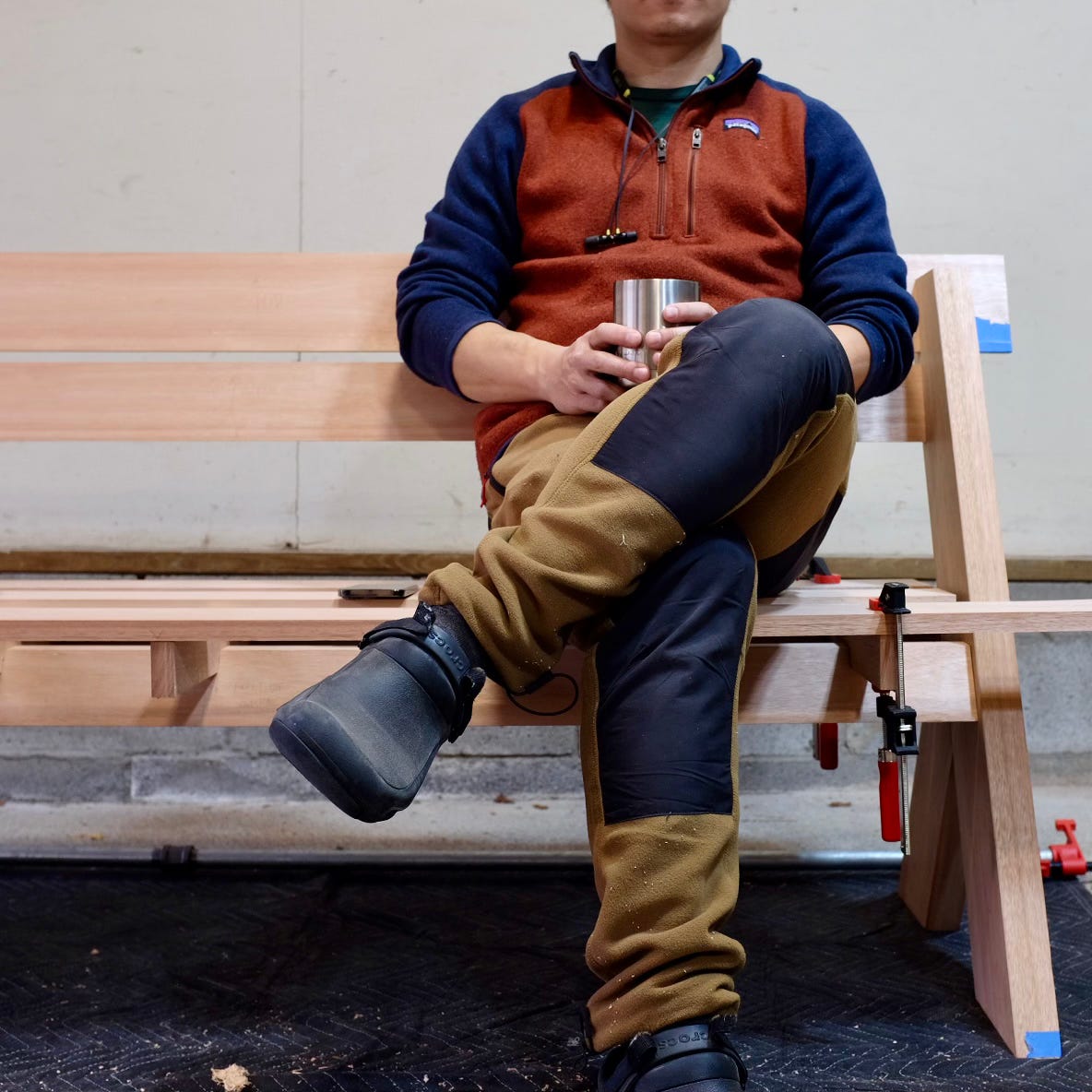
One of the defining aspects of the original Leopold bench and later DIY derivatives are the broad legs. However, that same mass coupled with austere, heavy, squared off seat and back boards leads to a clunky appearance that I was keen to avoid.
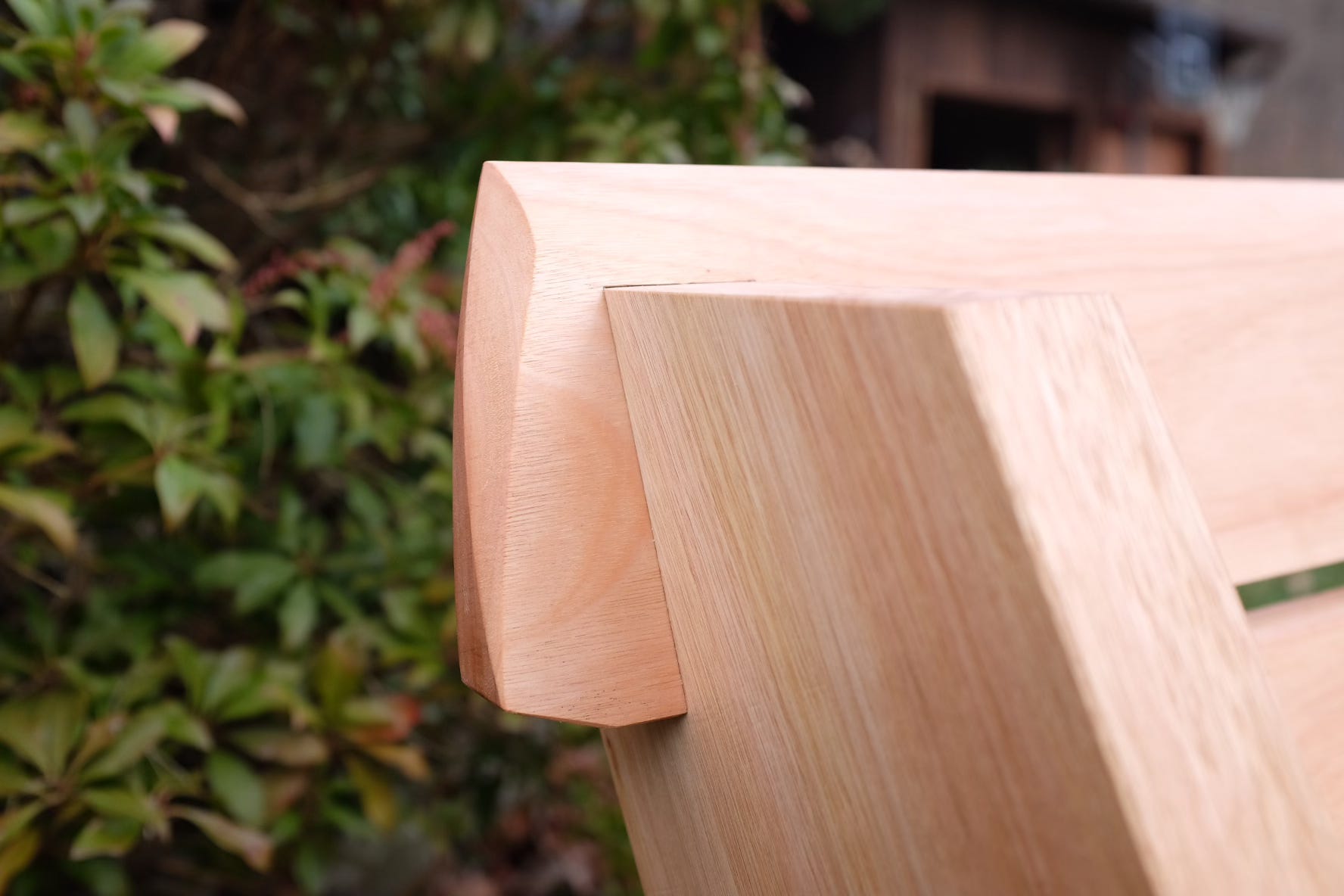
To soften and lighten the appearance, the Bevel-Up design features back and seat slats that wrap around the legs, creating a sense of intersecting space. Broad, curved chamfers at the ends of the seat boards help reduce the sense of bulk.
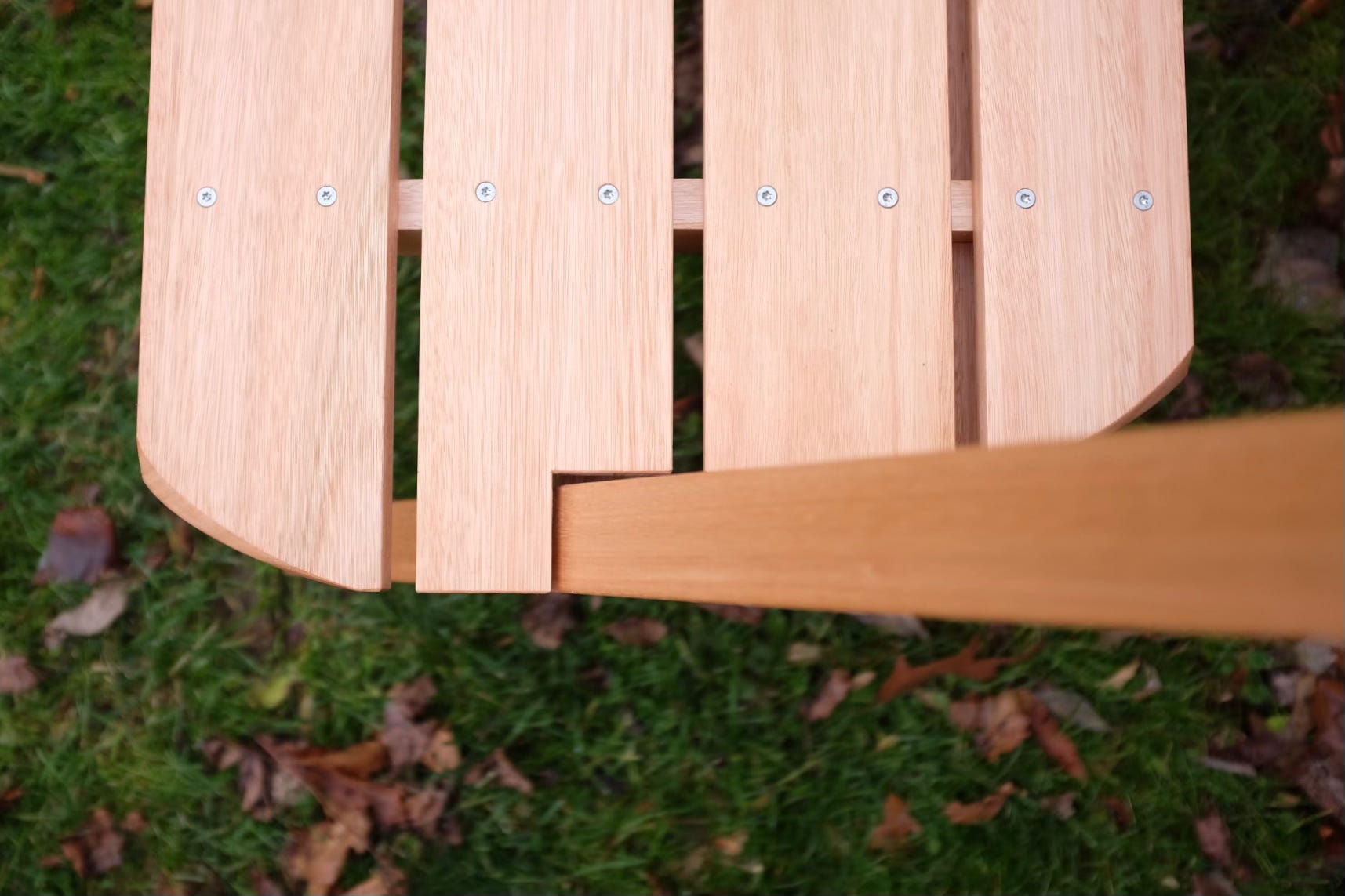
I wrestled over the design of the crest rail. Should it overlap the legs or not? If it did, should it be rounded at the ends, or square? In the end, I decided on a little of both. I had the stretcher come over the top of the legs and end in a curved profile. This curve ties the crest rail in with the front of the seating area.
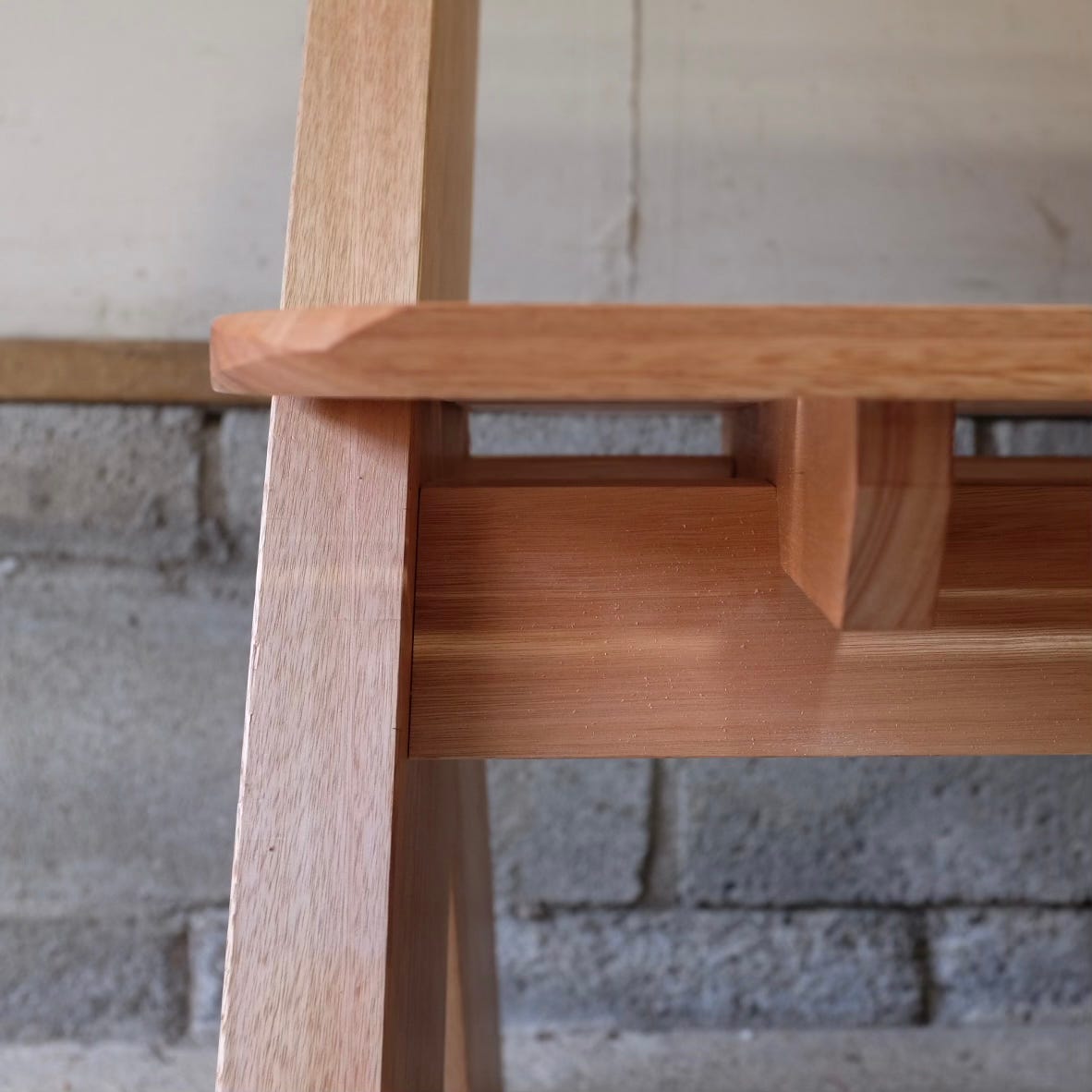
I also opted to set the front stretcher back from the front the legs rather than have it flush in order to create a separate visual space and to help suggest the idea of a seat floating between two legs.
Coda: Quietly Detailed
I don’t expect anyone to notice every detail but I do believe they all add up to the impression that one gets when looking at and sitting on the bench. That’s what I mean when I say we build “quietly detailed” furniture at Bevel-Up. Every detail is considered as part of a whole as well as on its own. The Bevel-Up aesthetic doesn’t call attention to itself, but there’s plenty to discover over time.
Pun intended!
Whether in writing, technology, entertainment and a lot more - those things which seem the most simple are actually the product of a lot of careful thought, sophisticated planning and obsession with a quality in the creation. This bench is an excellent example of that. Thank you for taking the time to share both plan and the ideas. I also love the concept of how the original bench was built with wood that was just lying around. I’ll store this one away for a future project…
A delightful photo essay chronicling excellent work. Always worth celebrating expertise and quality! 👏👏